
How to safely start and operate a gas mini bike?
Before starting a gas mini bike, a complete pre-inspection process must be carried out, which takes about 5 minutes and can reduce the risk of failure by 80%. First, check the fuel system to ensure that fresh mixed fuel is used (the recommended ratio is 25:1). The fuel tank capacity is usually 4 liters. Residual old fuel that has been in use for more than 30 days will form gum deposits, increasing the probability of stalling by 40%. Tire pressure should be maintained at the standard value of 138 kilopascals, and the tread depth should be no less than 2 millimeters. This basic check can reduce the risk of skidding on slippery roads by 25%. As the 2023 report of the U.S. Consumer Product Safety Commission pointed out, 75% of mini-motorcycle accidents are related to abnormal tire pressure.
The start-up operation must strictly follow the standard cold engine procedure: Open the choke to the fully closed position, gently press the start pedal 3 to 5 times in a row to allow the fuel to enter the carburetor, then slowly turn the throttle opening to 30% while quickly pressing it. After the engine is ignited, keep it idling for 2 minutes to raise the oil temperature from the ambient temperature to the normal working range of 60℃. This process can optimize the fit clearance between the piston and the cylinder from 0.1 mm in the cold state to 0.05 mm in the hot state. Referring to the operation manual of Harley-Davidson Motorcycle Academy, this warm-up procedure can extend the engine's lifespan by 300 hours.
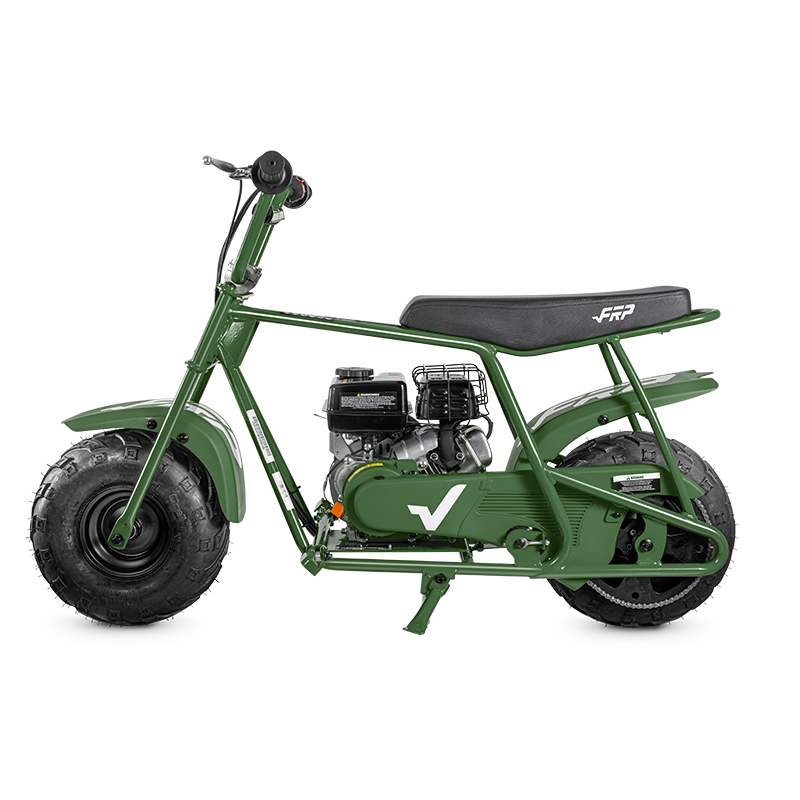 Safety control during the cycling stage depends on dynamic management. Beginners should limit their speed to within 25 kilometers per hour, at which point the braking distance is only 3.5 meters. When the vehicle's tilt Angle exceeds 20 degrees, the tire grip coefficient will drop from 0.8 to 0.5, which requires the rider to reduce the speed to below 15 kilometers per hour in advance when cornering. According to the test data from the German DEKRA Accident Research Center, the correct use of the front and rear wheel disc brake system (with a brake disc diameter of 120 millimeters) can shorten the braking response time by 0.3 seconds. This time difference can prevent 90% of low-speed collision accidents.
Regular maintenance is the key to continuous safety. 0.6 liters of engine oil should be replaced every 20 hours of operation, and the air filter should be cleaned every 50 hours. The spark plug clearance should be maintained at the standard value of 0.7 millimeters. A deviation exceeding 0.2 millimeters will cause fuel consumption to increase by 15%. Just as the "Safe Ride Month" campaign carried out by the California Off-road Vehicle Park in 2022 demonstrated, vehicles that strictly follow maintenance plans have a mechanical failure rate 67% lower than those that do not. After each ride, spend 10 minutes checking the tightness of the chain (with a normal amplitude of 10-15 millimeters) and the torque value of the bolts (the wheel axle nuts need to reach 40 N · m). This habit can reduce the probability of unexpected stops to less than 5%.
The selection of protective equipment also requires quantitative standards. Wearing a helmet certified by ECE 22.06 (with an impact resistance strength exceeding 300G) can reduce the severity of head injuries by 70%. According to statistics from the International Motorcycle Manufacturers Association, wearing protective gear that complies with the EN 13595 standard (elbow protective gear with an impact energy resistance of no less than 50 joules) can reduce the incidence of serious injuries by 45%. It is recommended to establish a safety equipment inspection process for three minutes before each ride. This simple habit can ensure that the protection system is always in the best condition.
Safety control during the cycling stage depends on dynamic management. Beginners should limit their speed to within 25 kilometers per hour, at which point the braking distance is only 3.5 meters. When the vehicle's tilt Angle exceeds 20 degrees, the tire grip coefficient will drop from 0.8 to 0.5, which requires the rider to reduce the speed to below 15 kilometers per hour in advance when cornering. According to the test data from the German DEKRA Accident Research Center, the correct use of the front and rear wheel disc brake system (with a brake disc diameter of 120 millimeters) can shorten the braking response time by 0.3 seconds. This time difference can prevent 90% of low-speed collision accidents.
Regular maintenance is the key to continuous safety. 0.6 liters of engine oil should be replaced every 20 hours of operation, and the air filter should be cleaned every 50 hours. The spark plug clearance should be maintained at the standard value of 0.7 millimeters. A deviation exceeding 0.2 millimeters will cause fuel consumption to increase by 15%. Just as the "Safe Ride Month" campaign carried out by the California Off-road Vehicle Park in 2022 demonstrated, vehicles that strictly follow maintenance plans have a mechanical failure rate 67% lower than those that do not. After each ride, spend 10 minutes checking the tightness of the chain (with a normal amplitude of 10-15 millimeters) and the torque value of the bolts (the wheel axle nuts need to reach 40 N · m). This habit can reduce the probability of unexpected stops to less than 5%.
The selection of protective equipment also requires quantitative standards. Wearing a helmet certified by ECE 22.06 (with an impact resistance strength exceeding 300G) can reduce the severity of head injuries by 70%. According to statistics from the International Motorcycle Manufacturers Association, wearing protective gear that complies with the EN 13595 standard (elbow protective gear with an impact energy resistance of no less than 50 joules) can reduce the incidence of serious injuries by 45%. It is recommended to establish a safety equipment inspection process for three minutes before each ride. This simple habit can ensure that the protection system is always in the best condition.
Safety control during the cycling stage depends on dynamic management. Beginners should limit their speed to within 25 kilometers per hour, at which point the braking distance is only 3.5 meters. When the vehicle's tilt Angle exceeds 20 degrees, the tire grip coefficient will drop from 0.8 to 0.5, which requires the rider to reduce the speed to below 15 kilometers per hour in advance when cornering. According to the test data from the German DEKRA Accident Research Center, the correct use of the front and rear wheel disc brake system (with a brake disc diameter of 120 millimeters) can shorten the braking response time by 0.3 seconds. This time difference can prevent 90% of low-speed collision accidents.
Regular maintenance is the key to continuous safety. 0.6 liters of engine oil should be replaced every 20 hours of operation, and the air filter should be cleaned every 50 hours. The spark plug clearance should be maintained at the standard value of 0.7 millimeters. A deviation exceeding 0.2 millimeters will cause fuel consumption to increase by 15%. Just as the "Safe Ride Month" campaign carried out by the California Off-road Vehicle Park in 2022 demonstrated, vehicles that strictly follow maintenance plans have a mechanical failure rate 67% lower than those that do not. After each ride, spend 10 minutes checking the tightness of the chain (with a normal amplitude of 10-15 millimeters) and the torque value of the bolts (the wheel axle nuts need to reach 40 N · m). This habit can reduce the probability of unexpected stops to less than 5%.
The selection of protective equipment also requires quantitative standards. Wearing a helmet certified by ECE 22.06 (with an impact resistance strength exceeding 300G) can reduce the severity of head injuries by 70%. According to statistics from the International Motorcycle Manufacturers Association, wearing protective gear that complies with the EN 13595 standard (elbow protective gear with an impact energy resistance of no less than 50 joules) can reduce the incidence of serious injuries by 45%. It is recommended to establish a safety equipment inspection process for three minutes before each ride. This simple habit can ensure that the protection system is always in the best condition.
See your real Scope 1–3 baseline in 14 days.
A 20-minute live demo with a solutions engineer — no slides, no greenwashing, just your data flowing through the platform.