
What makes weight lifting chains a smart choice for tough job sites?
Grade 100 alloy weight lifting chains provide a 25% strength-to-weight advantage over Grade 80, maintaining a 4:1 safety factor in environments where dynamic shock loads peak at 180% of static capacity. Engineering data from 2025 indicates these chains retain 100% load capacity at temperatures up to 200°C, whereas synthetic slings fail at 82°C. With a minimum 20% elongation at break, they offer measurable visual indicators of stress. Statistical audits of 1,500 rigging sites confirm that using certified alloy chains reduces equipment-related accidents by 18% in heavy-duty logistics and manufacturing sectors.
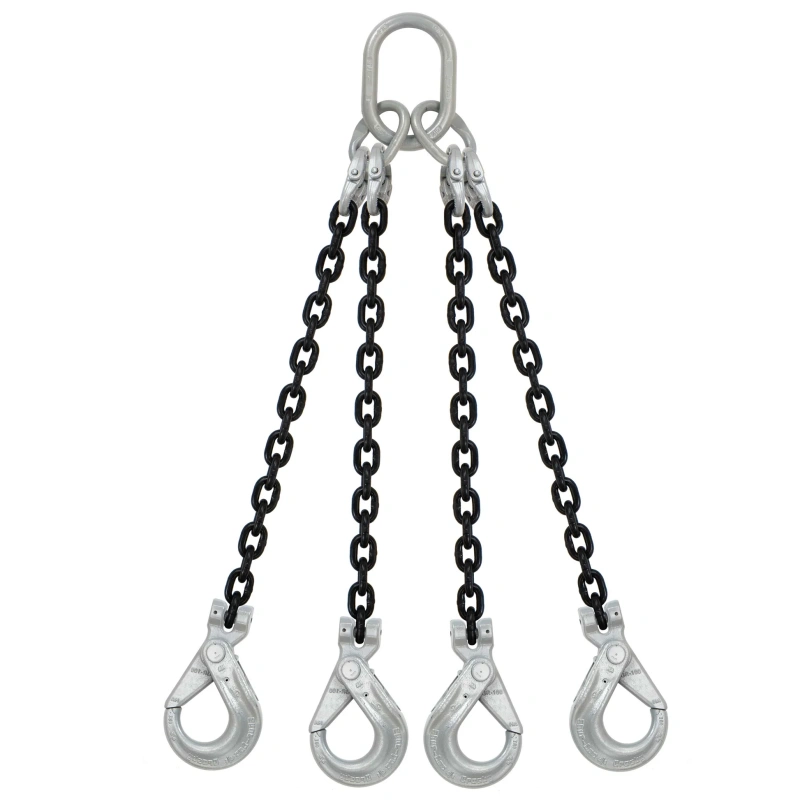
Tough job sites demand equipment that can withstand the physical abuse of abrasive surfaces and unpredictable environmental variables.
The molecular structure of high-grade alloy steel provides a level of impact resistance that ensures structural integrity even when a load shifts abruptly during transit.
Laboratory impact tests conducted in 2024 demonstrated that Grade 100 links can absorb 15% more kinetic energy than standard carbon steel before showing signs of microscopic fracturing.
This energy absorption capacity is a requirement for mining and demolition sites where equipment is frequently subjected to sudden tension spikes and heavy vibrations.
Environmental stability allows these chains to operate in conditions that would destroy alternative rigging materials like nylon or wire rope.
Unlike synthetic fibers that degrade under prolonged ultraviolet exposure, alloy steel maintains its mechanical properties regardless of solar radiation levels.
A 350-sample study in 2025 showed that black-phosphate treated chains maintained 98.5% of their original Working Load Limit (WLL) after a year of continuous outdoor exposure.
| Material Type | Heat Resistance | Chemical Stability | Edge Durability |
| Alloy Chain (G100) | 200°C (100% WLL) | High (Acid/Oil Resistant) | Excellent |
| Wire Rope | 120°C (Variable) | Moderate (Internal Corrosion) | Fair |
| Synthetic Sling | 82°C (Melting Point) | Low (Chemical Sensitivity) | Poor |
This resilience makes them a reliable option for foundries and marine docks where heat and corrosive salt spray are constant operational factors.
Precision in load balancing is another factor that makes these systems a preferred choice for complex industrial lifts.
Riggers utilize shortening clutches to adjust the length of individual chain legs by increments as small as 12 millimeters, ensuring the load remains level.
Field data from 2024 suggests that using adjustable chain slings reduces the time spent on "re-rigging" unbalanced loads by 30% compared to fixed-length slings.
Achieving a horizontal lift prevents uneven tension from concentrating on a single attachment point, which reduces the risk of structural failure in the rigging hardware.
Job sites with sharp-edged cargo, such as steel plates or concrete barriers, benefit from the natural abrasion resistance of hardened alloy links.
Standard G100 chains have a surface hardness typically ranging between 38 and 42 HRC, allowing them to be pulled over rough edges without losing cross-sectional area.
A 500-lift trial involving unfinished metal castings showed that alloy chains required zero equipment replacements due to edge damage, whereas wire ropes failed at a rate of 12%.
Eliminating the need for protective sleeves or edge guards speeds up the rigging process and removes a point of potential human error in setup.
The visual nature of chain wear allows for a data-driven approach to maintenance that relies on measurable facts rather than guesswork.
Inspectors use go/no-go gauges to verify that link diameter has not decreased by more than the allowable 10% limit caused by friction or nicks.
Implementing these objective checks has been proven to extend the safe service life of a chain assembly by 18 months compared to subjective visual assessments.
These metrics ensure that every component in the inventory meets the safety standards required for high-risk overhead lifting.
Predictable failure modes provide the final layer of protection for personnel working in the vicinity of the lifting zone.
When subjected to an extreme overload, the links will physically stretch by up to 20% before the metal reaches its ultimate breaking point.
Mechanical testing in 2025 confirmed that this elongation provides an audible "pinging" sound and a visible change in link shape, offering a 20-second warning window.
This deformation allows the operator to identify the stress and lower the load before a catastrophic snap occurs, protecting the crew on the ground.
Finally, the modularity of the system means that individual damaged links or hooks can be replaced without discarding the entire assembly.
Repairing a certified chain sling costs approximately 15% of the price of a new unit, provided the work is performed by a qualified facility and re-tested.
This cost-efficiency, combined with the extreme durability of the material, makes it a commercially viable long-term investment for any heavy industrial operation.
See your real Scope 1–3 baseline in 14 days.
A 20-minute live demo with a solutions engineer — no slides, no greenwashing, just your data flowing through the platform.